

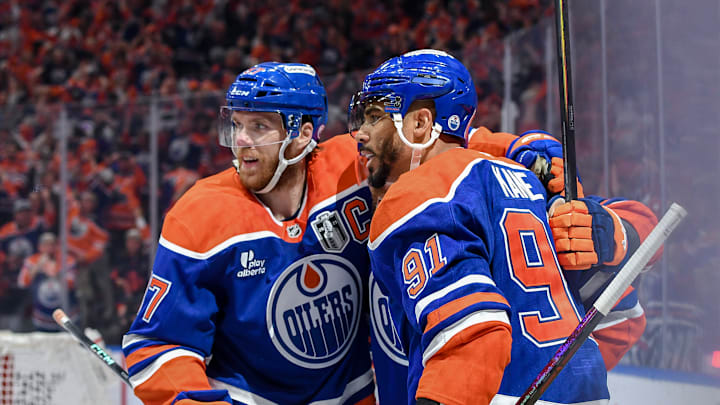
The Edmonton Oilers have firmly shut the door on any possibility of reacquiring Evander Kane, according to insider reports, as the Vancouver Canucks desperately search for takers on the veteran forward they obtained just months ago.
Canucks reporter Rick Dhaliwal revealed on Sportsnet's Halford and Brough in the Morning that Vancouver has explored the option of sending Kane back to Edmonton in a move that would represent a stunning reversal of last summer's transaction. However, sources within the Oilers organization have made it clear that revisiting that chapter holds zero appeal.
"My Edmonton source told me that ship has sailed for the Oilers," Dhaliwal stated during the broadcast. The message from Oil Country appears unambiguous that the club moved on from Kane for specific reasons and those reasons haven't changed.
Why Edmonton won't bite
The Oilers offloaded Kane to Vancouver in late June surrendering only a 2025 fourth-round selection while clearing his entire $5.125 million cap hit. That move was essential to Edmonton's salary cap management and allowed the team to allocate resources toward extending core pieces like Evan Bouchard.
Bringing Kane back would undo that financial flexibility the organization worked hard to create. With the Oilers currently positioned as legitimate Stanley Cup contenders, revisiting a contract that didn't align with their long-term structure makes little hockey or business sense.
Beyond the dollars, there's the matter of fit. Kane's declining production and ongoing injury concerns represent exactly the type of risk Edmonton was trying to avoid. The club has found ways to generate secondary scoring through other avenues and management appears content with the current roster construction.
Canucks face uphill battle moving Kane
The Canucks took a calculated gamble when they acquired Kane hoping his playoff pedigree and physical presence would translate into valuable contributions. Instead, they've watched that bet sour considerably.
Kane has managed just six goals and 14 assists across 42 appearances this season posting a concerning minus-15 rating along the way. Those numbers represent a significant drop from his previous output raising questions about whether age, injuries or both have caught up with the 34-year-old.
Complicating matters further, Kane sat out the entire previous regular season while recovering from multiple surgical procedures. League-wide concerns about his durability have made finding a trade partner extraordinarily challenging.
“One team told me ‘have fun moving him (Kane).’ You got the contract, you got the production that isn’t great, you got the age, injuries, he didn’t play in the regular season last year. He’s got trade protection. A couple of people told me the Canucks tried to peddle him back to Edmonton. I haven’t confirmed that… Why wouldn’t you if you’re desperate?” Dhaliwal shared during the podcast.
That trade protection which is a 16-team no-trade list, adds another layer of complexity to any potential deal. Vancouver can't simply ship Kane to the highest bidder as they need to find a destination he will approve while also identifying a team willing to absorb the financial commitment.
NHL insider David Pagnotta suggested earlier this month that any potential Kane movement would likely occur near the March 6 trade deadline rather than in the immediate term.
Trade validated Edmonton's summer decision
From the Oilers' vantage point, the Kane trade accomplished exactly what it needed to accomplish. The club freed up crucial cap space and allowed younger players to step into expanded roles while also avoiding the risk of Kane's injury history derailing their playoff push.
While Kane did contribute during Edmonton's deep playoff run last spring recording six goals and six assists in 21 postseason games, the organization clearly viewed his situation as unsustainable moving forward. That assessment has only been validated by his struggles in Vancouver.
The fact that the Canucks reportedly attempted to reverse the trade speaks volumes about how poorly the acquisition has worked out. For Edmonton, however, looking backward holds no appeal when the focus remains squarely on the ultimate prize.
So the Kane chapter appears firmly closed. The decision to move him last summer came with careful consideration of the team's long-term needs and nothing about the current situation suggests reconsidering that choice.
As the trade deadline approaches Edmonton can watch Vancouver's predicament from a comfortable distance, grateful they made the difficult call when they did.
 Add us as a preferred source on Google