

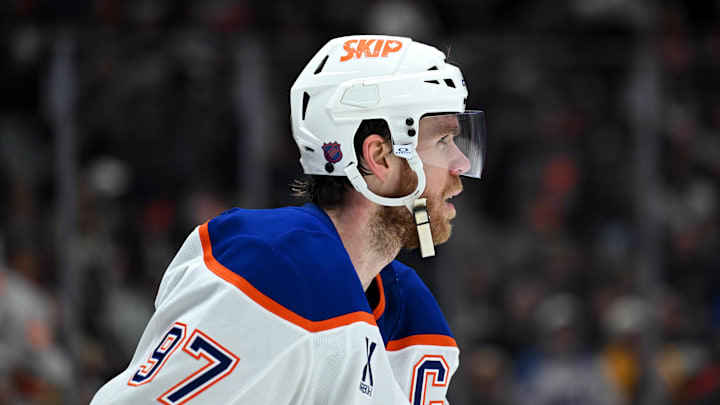
The Edmonton Oilers' disappointing first-round playoff exit at the hands of the Anaheim Ducks really exposed a good many problems with their game. After back-to-back Stanley Cup Final appearances, the team's earliest elimination since 2021 has prompted serious questions about what went wrong.
In his season-ending press conference, captain Connor McDavid pointed out the fatal flaw that doomed Edmonton's championship aspirations.
Oilers penalty kill crisis
When asked about the team's struggles, McDavid was direct in identifying the root cause of their downfall. The penalty kill allowed a 50 percent power play conversion rate to the Ducks, with Anaheim scoring at least one power-play goal in each game of the series.
"The kill was an Achilles heel for sure," McDavid stated. "The best PKs are on their toes, reading off each other, aggressive. At times we got stale, stagnant. When you're standing still, it's very difficult. We need to be more on our toes and more connected."
Edmonton finished the regular season with a 77.8 percent penalty kill rate, ranking 20th in the NHL. But the playoff collapse was catastrophic. Anaheim converted 8 of 16 power play opportunities for a 50 percent success rate, exploiting every weakness in Edmonton's special teams.
The penalty kill issues weren't confined to the playoffs. During a month-long stretch starting in January, the Oilers ranked last in the NHL in penalty-kill percentage at just 57.7 percent. The problem festered throughout the campaign, with McDavid acknowledging the persistent nature of the struggle.
"We weren't very good on the penalty kill," McDavid admitted. "Our power play didn't get off to a good start but found its way into the series. Obviously, we don't get one tonight, but we struggled on the PK all year, too, we've been searching for consistency there, too."
Key penalty kill specialist Adam Henrique, who played the second-most minutes on the unit during the regular season at 107:40, was lost for the series after sustaining a lower-body injury in Game 1. Fellow specialist Jason Dickinson was not at 100 percent throughout the series, further crippling the unit's effectiveness.
Beyond special teams
While the penalty kill was the primary culprit, McDavid identified broader issues plaguing the team's performance. When asked about the regular season's importance, he connected the dots between inconsistent play and playoff failure.
"Yeah, it does. The regular season matters," McDavid explained. "It's not easy to get in, as we showed this year. You're building your team for when it matters most. We searched for consistency all year long and never found that rhythm. That starts in the regular season—from day one of training camp."
The captain's assessment touched on the team's overall approach. "We need a better regular season. Maybe that helps with injuries, not pressing so hard down the stretch, getting guys rest so we hit the playoffs full steam."
Throughout the press conference, McDavid refused to make excuses while shouldering responsibility for the team's shortcomings. When asked about organizational regression, he was unequivocal.
"The organization as a whole is taking a step back. And that starts with me. Starts with me, starts with Leon. We all can be better and we all need to be better," McDavid stated.
On the question of veteran development, he offered a stark reality check. "I do see a path, but it's going to take everybody to be better. It's weird to talk about development for veterans, but us veterans need to find a way to get better and develop and everybody does. That's the only way it's going to change."
When asked about spreading ownership throughout the roster, McDavid acknowledged the challenge. "I wish I had a better answer. That's a great question. Everybody's just got to care. It's got to be more than a job."
A wake-up call
Perhaps most telling was McDavid's reflection on complacency. "Yeah, maybe we took it for granted, how hard it is to be a great team, to make the playoffs, to win in the playoffs. You need to put everything into it. This year maybe we thought it would just happen, but things don't just happen."
The emotional element also drew scrutiny. When asked if the team needed to show more emotion, McDavid agreed. "Yeah, I don't think that's a bad thing. We were a little emotionless at times. Everyone wants to stay calm, but frustration is part of it. For guys that want to win, that emotion is okay."
The Oilers finished second in the Pacific Division with a 41-30-11 record and 93 points, but the early exit exposed fundamental flaws that regular-season success masked. This was Edmonton's earliest playoff exit since being swept by the Winnipeg Jets in the first round in 2021.
With McDavid's contract extension beginning next season, the pressure is mounting. When asked about patience versus frustration, he was candid. "There's no doubt everyone knows what we're trying to do here. We're pressing pretty hard, so patience is worn pretty thin."
As for his commitment to Edmonton, McDavid reaffirmed his desire to win with the Oilers. "I want to win, and I want to win here in Edmonton. That's my focus."
The Achilles heel has been exposed. Whether the Oilers can heal it in time within their championship window remains the big question of their offseason.
 Add us as a preferred source on Google